Our Intent
The National Curriculum for Science aims to ensure that all children:
- Develop scientific knowledge and conceptual understanding through the specific disciplines of biology, chemistry, and physics.
- Develop an understanding of the nature, processes, and methods of science through different types of scientific enquiries that help them answer questions about the world around them.
- Are equipped with the scientific knowledge and skills required to understand the uses and implications of science, today and for the future.
At St Luke’s, we encourage children to be inquisitive throughout their time at school and beyond. Our Science curriculum fosters a healthy curiosity about the universe and promotes respect for both living and non-living things. We believe high-quality science education balances the acquisition of substantive knowledge (key facts, concepts, and vocabulary) with disciplinary knowledge (working scientifically) and positive attitudes.
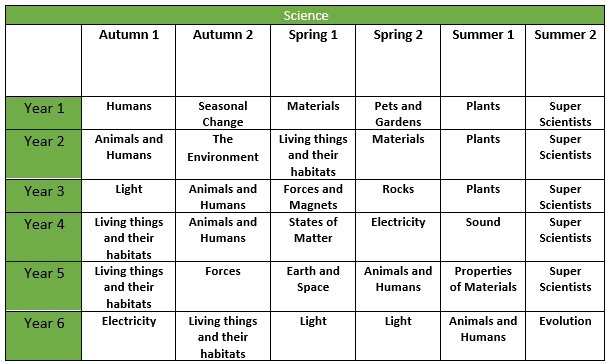
Throughout the programmes of study, children build and revisit key concepts sequentially across each year group. We ensure that Working Scientifically skills are progressively developed so that children can apply their understanding when using equipment, conducting comparative and fair tests, building evidence-based arguments, and explaining concepts with confidence.
Implementation: Planning and Delivery
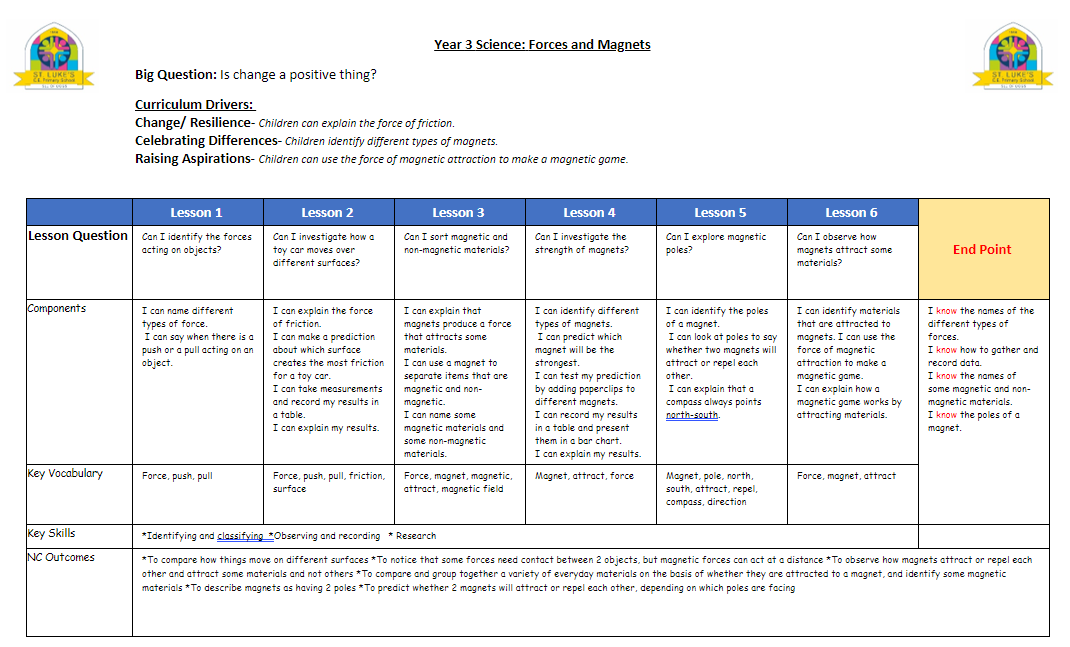
Our school uses the statutory National Curriculum in England as the foundation for our curriculum planning, supported by our chosen Science Scheme of Work. Medium-term plans are carefully sequenced so that prior learning is revisited, misconceptions are addressed, and children are increasingly challenged as they move through the school. Meaningful links are made to termly themes and other curriculum subjects where appropriate, as mapped on our Wider Curriculum Overview.
Science is taught weekly by class teachers, who adapt planning and resources to ensure all pupils transfer key knowledge into their long-term memory. Enrichment opportunities—including educational visits, workshops, STEM initiatives, and visiting specialists—are purposefully planned to broaden children’s horizons and reinforce classroom learning.
Early Years Foundation Stage (EYFS)
In Nursery and Reception, Science is taught as an integral part of our topic work and continuous provision, guided by the EYFS Statutory Framework. Scientific learning sits primarily within the Understanding the World educational programme, alongside Communication and Language and Personal, Social and Emotional Development.
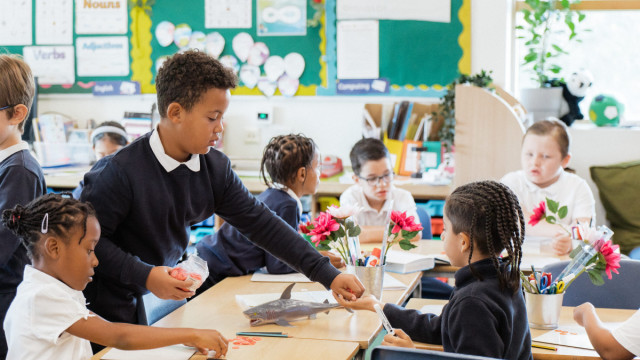
Through hands-on exploration, rich vocabulary, and play—such as investigating floating and sinking, observing seasonal changes, and caring for plants and minibeasts—children begin to make sense of their physical world and build the foundational knowledge needed for Key Stage 1.
Inclusion and Special Educational Needs (SEND)
We teach Science to all children, regardless of ability or starting point, in line with our commitment to providing an ambitious, broad, and balanced curriculum. Teachers adapt lessons, scaffold practical tasks, and pre-teach key scientific vocabulary so that every pupil—including those with SEND—can access the same core concepts and experience success.
Spiritual, Moral, Social and Cultural (SMSC) Development
Science offers children rich opportunities to explore fundamental questions about life, such as evolution, inheritance, and the origins of the universe. By studying the intricate processes that sustain living things, children develop a genuine sense of awe and wonder about the natural world.
Science also prompts important social, ethical, and moral discussions. We encourage pupils to reflect on human impact, sustainability, and how scientific innovation helps us care for the planet and manage Earth’s resources responsibly. Furthermore, learning about human biology and environmental factors helps children understand diversity and fosters respect for others.
Monitoring and Impact
The Science Subject Leader and Senior Leadership Team (SLT) evaluate the effectiveness of Science teaching and learning in line with the School Improvement Plan and our curriculum intent. Rather than relying solely on paperwork, monitoring focuses on the lived experience of pupils and the retention of knowledge over time through:
- Learning walks and lesson drop-ins to observe live teaching and practical enquiry.
- Pupil voice discussions to assess how well children articulate scientific concepts and recall prior learning.
-
Book and work looks alongside curriculum planning reviews to ensure progression, coverage, and responsive feedback.
Click for Science Skills Progression Map