Our intent
At St. Luke’s, we believe that every child can achieve success in mathematics. We aim to provide all pupils with a high-quality mathematics education that develops confidence, resilience, curiosity and enjoyment in the subject. Through a carefully sequenced curriculum and high-quality teaching, we equip children with the mathematical knowledge, skills and vocabulary they need to succeed both now and in the future.
Our mathematics curriculum is designed to ensure that pupils build secure foundations of understanding, make meaningful connections between mathematical concepts and develop the confidence to apply their knowledge in a range of contexts. We want children to see themselves as successful mathematicians who are willing to take risks, explain their thinking and persevere when faced with challenge.
Intent
The National Curriculum for Mathematics aims to ensure that all children:
-
Become fluent in the fundamentals of mathematics through varied and frequent practice, developing conceptual understanding and the ability to recall and apply knowledge accurately and efficiently.
-
Reason mathematically by making conjectures, identifying patterns and relationships, and justifying solutions using precise mathematical language.
-
Solve problems by applying their mathematics to a range of routine and non-routine situations, developing resilience and strategic thinking.
At St. Luke's, our curriculum has been carefully designed to ensure that pupils gain both procedural fluency and conceptual understanding. We place equal importance on children being able to explain their thinking, reason mathematically and apply their learning to increasingly complex problems.
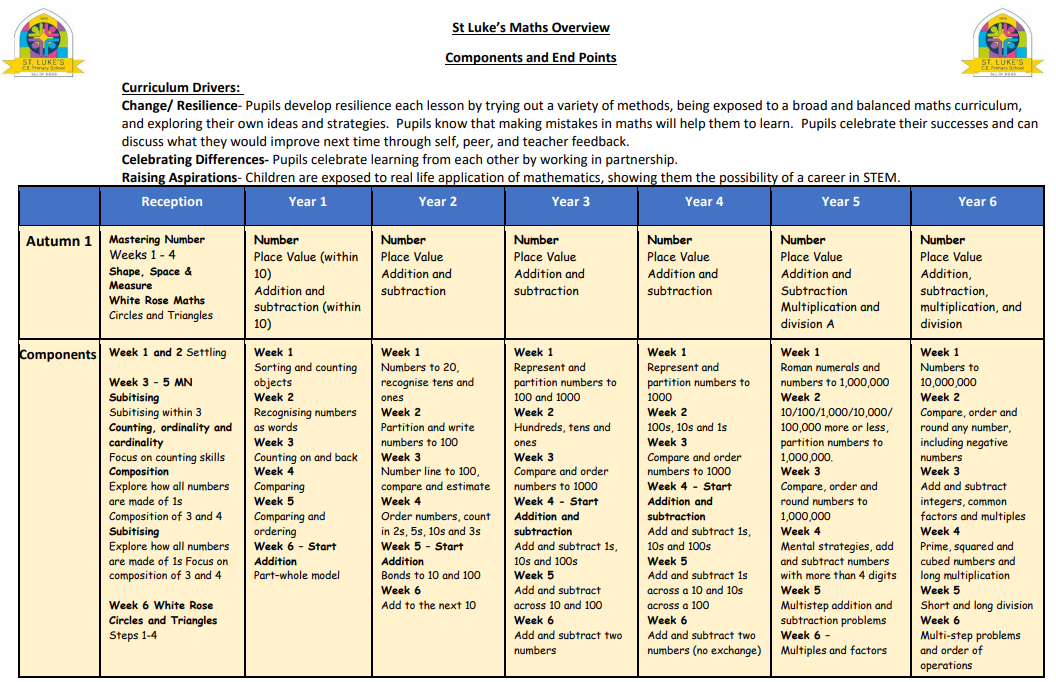
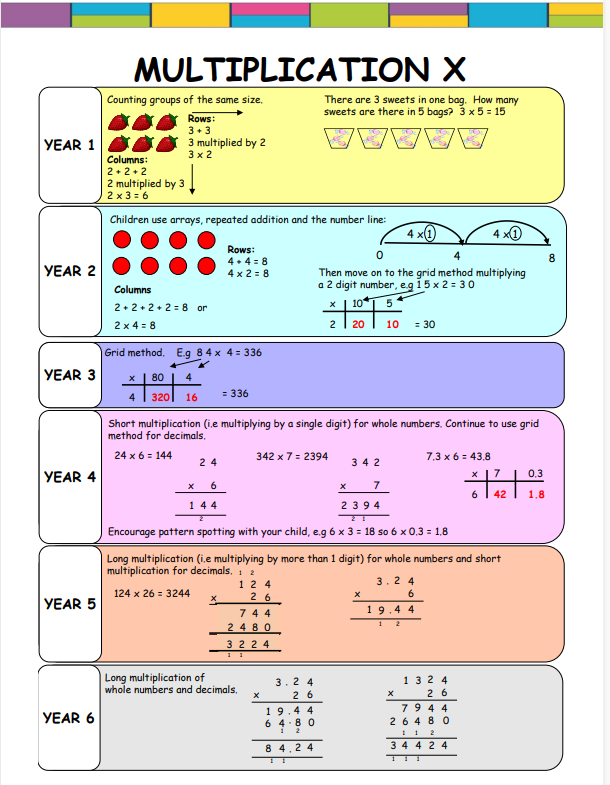
We follow the White Rose Maths scheme of learning, which provides a coherent and progressive curriculum from Reception to Year 6. The curriculum is structured into small, carefully sequenced steps that allow pupils to build new learning upon secure prior knowledge. This approach supports children in developing a deep understanding of mathematical concepts before moving on to more complex content.
Our mathematics curriculum is further enhanced through the NCETM Mastering Number Programme in Reception and Key Stage 1. This Department for Education accredited programme supports the development of strong number sense, fluency and flexibility with number. Research demonstrates that children who develop secure number sense in the early years are more likely to achieve success in mathematics throughout their education.
To further develop fluency and recall of key number facts, pupils have access to NumBots and Times Table Rock Stars. These online platforms provide engaging opportunities for children to practise and secure essential number bonds, addition and subtraction facts, and multiplication and division facts both at school and at home. By improving automatic recall, pupils are able to devote more of their cognitive resources to reasoning and problem solving.
Through high-quality mathematics teaching, we aim to develop confident, resilient and independent learners who understand the relevance of mathematics in everyday life and are well prepared for the next stage of their education.

Planning and Delivery
Teachers plan mathematics using the progression and unit overviews provided by White Rose Maths. Learning is carefully sequenced so that new concepts build upon previously taught knowledge, allowing pupils to make meaningful connections within mathematics.
Lessons typically include opportunities for pupils to:
-
Retrieve and revisit prior learning.
-
Develop fluency with key mathematical concepts and procedures.
-
Explain and justify their thinking using mathematical language.
-
Apply their knowledge through reasoning and problem-solving activities.
-
Practise and refine new learning independently and collaboratively.
We are committed to an inclusive approach in which the vast majority of pupils learn the same ambitious curriculum. Teachers use adaptive teaching strategies to ensure that all pupils can access learning successfully whilst maintaining high expectations.
Adaptive teaching may include:
-
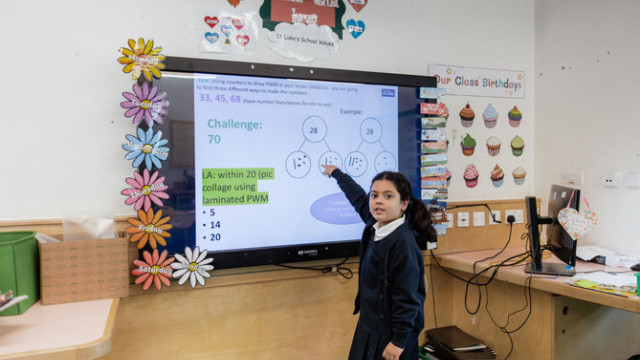
The use of concrete, pictorial and abstract representations.
-
Carefully chosen scaffolds and visual supports.
-
Additional modelling and guided practice.
-
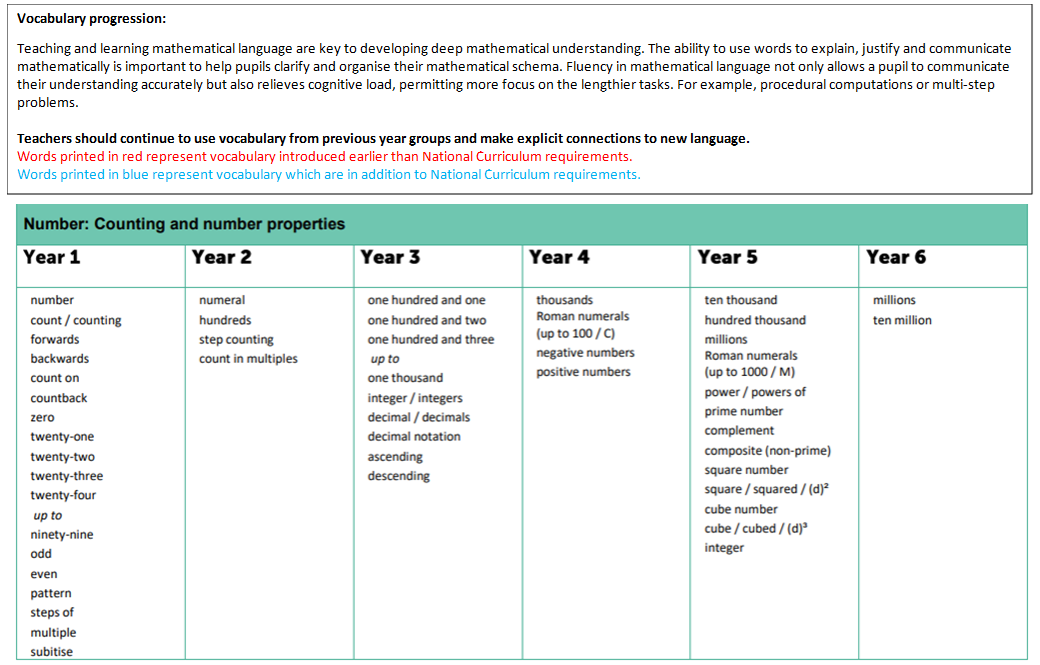
Pre-teaching of vocabulary and key concepts.
-
Flexible grouping and targeted teacher support.
-
Adjustments to task design while maintaining the same learning objective.
Rather than lowering expectations, adaptations are used to remove barriers to learning and enable pupils to achieve success within the curriculum.
Every lesson provides opportunities for pupils to develop mathematical reasoning and problem-solving skills, enabling them to deepen their understanding and apply mathematics confidently in a wide range of situations.
Assessment in Mathematics
Assessment is an integral part of the teaching and learning process and is used to inform future planning, identify gaps in understanding and ensure that all pupils make strong progress through the curriculum.
Teachers undertake ongoing formative assessment during lessons through:
-
Questioning and discussion.
-
Observation of pupils' learning.
-
Analysis of pupils' written work.
-
Targeted feedback and retrieval activities.
Alongside this daily assessment, pupils complete termly summative assessments at the end of the autumn, spring and summer terms. We use NFER Mathematics Assessments to provide reliable and standardised information about pupils' attainment and progress against national expectations.
Assessment information is combined with teachers' professional judgement, informed by evidence from pupils' classwork, independent application of skills and understanding demonstrated over time.
Teachers use assessment outcomes to:
-
Identify strengths and next steps in learning.
-
Inform planning and curriculum adaptations.
-
Provide timely intervention where needed.
-
Support discussions during pupil progress meetings.
-
Monitor attainment and progress across groups of pupils.
Assessment information is shared with senior leaders and the mathematics subject leader, enabling leaders to evaluate curriculum effectiveness and identify any areas for further development.
Special Educational Needs and Disabilities (SEND)
At St. Luke's, we are committed to ensuring that all pupils, including those with Special Educational Needs and Disabilities (SEND), can access and achieve success within mathematics.
We recognise that pupils may require different levels and types of support to succeed. Teachers work closely with the SENDCo, support staff and parents to identify barriers to learning and provide appropriate provision that enables pupils to engage meaningfully with the mathematics curriculum.
Where appropriate, pupils may access a personalised curriculum that reflects their individual starting points, needs and targets. Personalisation may include:
-
Carefully adapted learning activities and resources.
-
Individualised scaffolds and visual supports.
-
Additional pre-teaching or overlearning opportunities.
-
Small group or one-to-one intervention.
-
Targeted use of manipulatives and practical resources.
-
Precision teaching of key mathematical concepts and number facts.
-
Technology-based support where appropriate.
Teachers use adaptive teaching approaches to ensure that pupils with SEND remain connected to the learning of their peers wherever possible. High expectations are maintained for all pupils, and support is carefully matched to individual needs to promote independence, confidence and progress.
The impact of provision is monitored regularly through teacher assessment, pupil progress meetings and reviews of individual support plans to ensure that pupils receive the most effective support.
Monitoring Mathematics
The mathematics subject leader and senior leadership team monitor the quality of mathematics education to ensure that the curriculum is implemented effectively and that pupils know more, remember more and can do more over time.
Monitoring activities include:
-
Book scrutinies and work sampling.
-
Lesson observations and learning walks.
-
Pupil voice activities and discussions.
-
Review of assessment information and outcomes.
-
Evaluation of planning and curriculum implementation.
Findings from monitoring activities are used to identify strengths, celebrate effective practice and inform future school improvement priorities.
The mathematics subject leader works closely with staff to develop subject knowledge, share best practice and ensure consistency in the implementation of the curriculum across the school.
Continued Professional Development
Professional development is central to maintaining high-quality mathematics teaching at St. Luke's.
The mathematics subject leader identifies priorities for development through monitoring activities, assessment information and whole-school improvement priorities. Staff receive ongoing support through:
-
Staff meetings and professional development sessions.
-
Coaching and mentoring.
-
Collaborative planning opportunities.
-
Team teaching and lesson study approaches.
-
Local authority mathematics networks and training.
-
White Rose Maths professional development materials.
-
NCETM professional development programmes.
Since the implementation of White Rose Maths and the NCETM Mastering Number programme, staff have continued to develop their expertise in curriculum design, mathematical pedagogy, adaptive teaching and assessment.
Through sustained professional development and collaboration, we ensure that mathematics teaching remains ambitious, inclusive and effective, enabling all pupils to achieve their potential as mathematicians.